Clean water plays a bigger role in our daily routines than we sometimes realize. From washing dishes after dinner to taking a refreshing shower before work, we rely on water for dozens of small tasks throughout the day. Yet, when water contains excessive minerals, ordinary cleaning can become surprisingly frustrating. Soap leaves residue, glassware loses its shine, and stubborn deposits appear on taps and showerheads.
Fortunately, modern water treatment systems offer practical ways to address these problems. Understanding how they work, what features matter, and which solution fits your household can help you make a smarter decision without spending money on equipment you don’t really need.
Why Water Hardness Can Affect Your Daily Routine
Hard water contains elevated levels of dissolved minerals, particularly calcium and magnesium. Although these minerals are generally not considered a health concern at typical hardness levels, they can create problems around the home.
Think about washing your hands with soap that barely lathers or stepping out of the shower only to find your skin feels coated. You might also notice cloudy marks on drinking glasses, white deposits around faucets, or scale collecting inside your kettle.
These issues occur because minerals can react with soap and remain behind as water evaporates. Over time, deposits may accumulate inside pipes, water heaters, and certain household appliances.
The impact varies from one home to another. Water hardness, temperature, cleaning habits, and appliance design all influence how noticeable the problem becomes. That’s why understanding your water supply is a useful first step before choosing a treatment system.
How Water Softening Systems Work
Water softeners are designed to reduce hardness by removing calcium and magnesium ions through an ion-exchange process. In many conventional systems, water passes through resin beads that exchange hardness minerals for sodium or potassium ions.
Once the resin becomes saturated, the system regenerates it using a salt solution. The process restores the resin’s ability to treat water, allowing the system to continue operating.
For households with consistently hard water, this treatment can help reduce scale formation and improve the performance of appliances affected by mineral deposits. Soap and detergent may also work more effectively, potentially reducing the amount needed for certain cleaning tasks.
However, not every softener works in exactly the same way. Capacity, regeneration frequency, household water consumption, and incoming hardness all influence performance. A system that’s suitable for a small apartment may not be the right choice for a large family with several bathrooms.
Why System Design Matters
When comparing water treatment equipment, it’s easy to focus entirely on price or advertised capacity. But the internal design can make a meaningful difference, particularly for households with higher water demand.
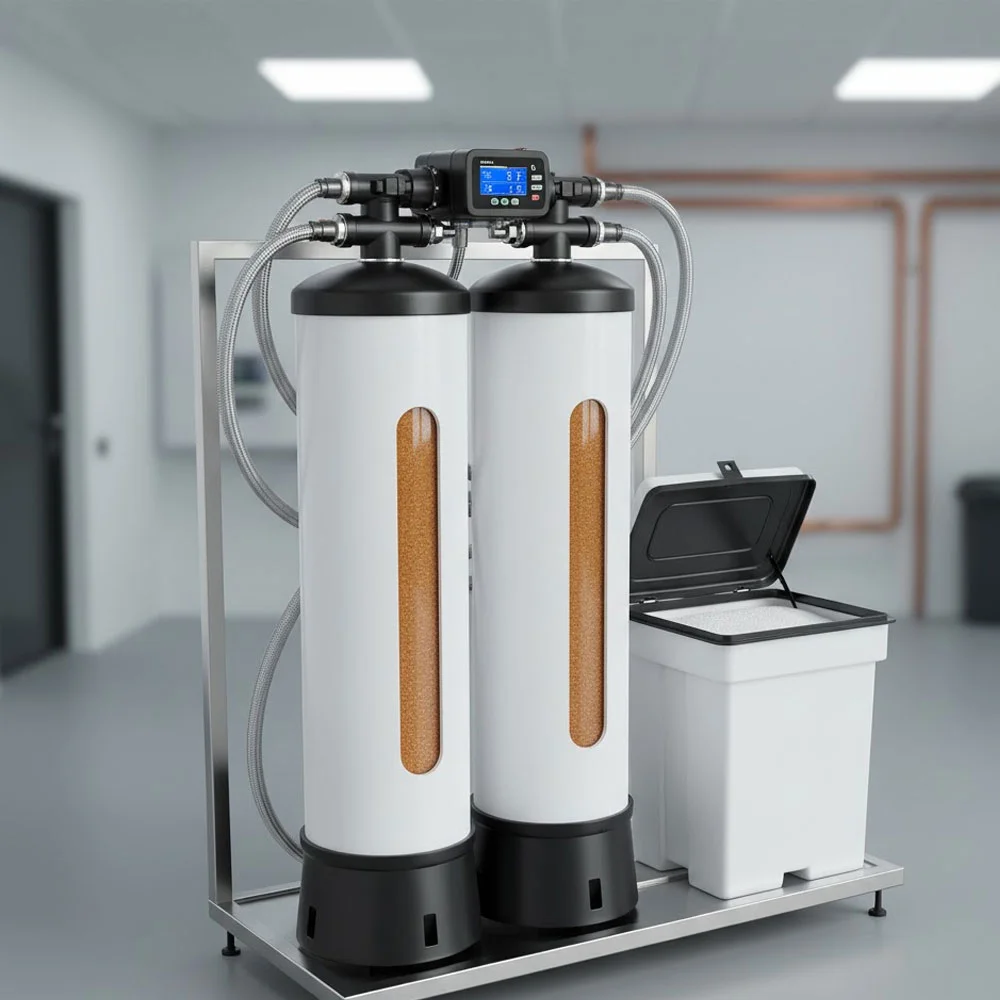
A multi-tank design can help provide a more continuous supply of softened water. In certain twin-tank or multi-tank systems, one tank treats water while another regenerates or remains available for service. This arrangement can reduce interruptions that may occur with some single-tank systems during regeneration.
Such designs can be useful in larger homes, commercial facilities, and locations where water consumption remains high throughout the day. Hotels, laundries, and other businesses may have different operating requirements from an ordinary household, so system selection should reflect actual demand.
Still, more tanks don’t automatically mean better performance. The system’s rated capacity, flow rate, regeneration controls, maintenance requirements, and installation quality matter just as much. Ask a supplier to explain how the equipment behaves during peak demand and what happens when regeneration begins.
The Difference Soft Water Makes During Cleaning
One noticeable benefit of softened water is how it interacts with soaps and detergents. Because hardness minerals are reduced, soap can lather more easily, and mineral-related residue may become less troublesome.
This can be particularly helpful when washing bathroom surfaces, cleaning glass, or doing laundry. Clothes may feel less stiff when mineral deposits are reduced, although results depend on fabric type, detergent, washing conditions, and the original water supply.
A soft water rinse can also help reduce mineral spotting on suitable surfaces after washing. For example, homeowners may find it easier to keep shower screens and chrome fixtures looking clean when fewer hardness minerals remain behind.
That doesn’t mean every surface will become spotless without effort. Existing scale may still require careful removal, and softened water won’t eliminate grease, dirt, or every type of stain. Using the right cleaning products and following appliance instructions remain important.
It’s also worth remembering that softened water isn’t necessarily the same as purified drinking water. A standard softener isn’t designed to remove all contaminants, so additional treatment may be needed if testing identifies a separate water-quality concern.
Renting or Buying: Which Option Makes Sense?
Not every household wants to purchase and maintain a water treatment system outright. Renting can offer an alternative, especially for people who prefer predictable payments or don’t want to manage every servicing detail themselves.
Before making a decision, review the rental program information provided by the supplier. Look closely at the monthly cost, installation charges, maintenance coverage, salt or consumable expenses, contract length, and cancellation conditions.
Some arrangements may include scheduled servicing and equipment repairs, while others leave certain costs to the customer. Clarifying these details upfront can prevent unpleasant surprises later.
Buying may be more economical over the long term if you expect to remain in the property and are comfortable arranging maintenance. Renting could make more sense when upfront spending is a concern or when a service package offers useful support.
Compare the total expected cost rather than looking only at the initial payment. A clear contract and a reliable service provider are often more valuable than a promotional offer that seems too good to pass up.
Choosing the Right System for Your Property
Start by testing your water hardness. A simple test can indicate whether mineral content is high enough to justify treatment, while a qualified laboratory can investigate additional concerns when necessary.
Next, estimate your household’s water demand. Consider the number of occupants, bathrooms, appliances, and periods of peak usage. These details help determine the capacity and flow rate required.
Ask potential suppliers about installation space, drainage, electrical requirements, ongoing maintenance, and expected operating costs. If drinking-water sodium content is a concern, discuss suitable alternatives with a qualified water-treatment professional.
Finally, look beyond sales promises. Request clear specifications, warranty details, service arrangements, and an explanation of what the equipment can and cannot remove.
Making a Practical Long-Term Choice
Better water treatment doesn’t have to involve complicated decisions or the most expensive equipment on the market. The best solution is one that addresses your actual water conditions, fits your daily routine, and remains manageable over time.
Whether you’re exploring a more efficient softening system, hoping to reduce mineral deposits during cleaning, or comparing rental and purchase options, start with reliable information. Test your water, understand your household’s needs, and ask questions before committing.
Small improvements can make everyday chores less frustrating. More importantly, choosing carefully helps you spend money where it matters, maintain your equipment properly, and enjoy a home that works a little better every day.