A couple choosing an engagement ring may agree on the look long before agreeing on the materials. One person might want to give an older jewel another life. The other might be drawn to a newly made piece with a lab-grown diamond or a band whose gold source can be described precisely. These priorities can overlap. A vintage stone can be reset in recycled gold, and a lab-grown diamond can be placed in a restored mount.
Start by identifying which part of the choice you would like to be able to explain. It could be the age, the origin or the way the piece was remade. Thinking about engagement rings that reflect a couple’s values becomes easier when you compare what each route can show you about the finished ring.
Vintage puts an existing piece back into use
A complete vintage ring is worth considering if you like its design and want to preserve it. Ask whether the seller knows when it was made and whether it has already been altered. An older ring may have a replacement stone or previous repair. An assessment of the setting and band gives you a basis for judging how much work the ring needs.
If you have a family piece, think about whether you want to keep the whole ring or use one part of it. Ask for advice before removing a stone. A jeweller can assess wear and help you decide whether keeping the mount intact would preserve more of what you value. Leave room in the budget for resizing or other necessary work.
Recycled metal gives you a sourcing question you can ask directly
If you are choosing a new design, ask which parts of it can be made with recycled gold. A claim can cover a band or casting without covering every part of the finished ring. Ask what the jeweller can document, and see a sample in the proposed alloy and finish. Recycled origin and the colour of the finished gold are separate considerations.
If you bring your own gold, discuss how it will be used. Some workshops may be able to use it directly in a suitable design. Others may work with a refiner or exchange it for different stock. Ask what evidence will accompany the piece and what will happen to any unused material.
Lab-grown makes the diamond’s origin one part of the decision
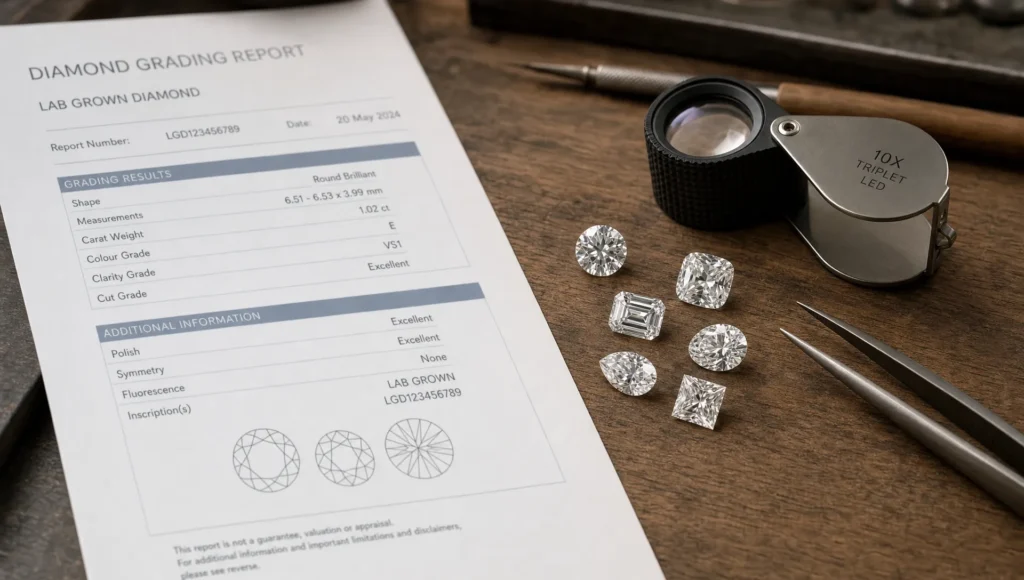
A laboratory-grown diamond can suit someone who wants diamond and prefers that route of production. Ask for the report or description of the exact stone. If energy use or producer information matters to you, ask for evidence beyond the fact that the diamond was grown in a laboratory. Decide how much you need to know to feel comfortable with the choice.
Compare the finished setting as well as the stone. If you have a suitable older mount, ask whether it can safely take the measurements of the diamond you like. A new mount can be made to suit the stone and your daily routine. Either way, ask for the complete cost and a clear account of the materials.
Final Thought
Choose the route that supports the priority you care about most, then check condition, fit and documentation. Combining two approaches can work when each material has a clear place in the design and the jeweller can explain how it will be used.