Water treatment isn’t one of those home improvement topics people usually get excited about. Nobody wakes up thinking, “Today feels like a great day to research filtration membranes.”
Yet the moment water starts leaving white marks on the shower, making coffee taste odd, or causing a buildup inside appliances, it suddenly becomes hard to ignore.
The good news is that fixing household water problems doesn’t have to be complicated. The key is figuring out what is actually wrong before choosing equipment. Hardness, sediment, unpleasant taste, and dissolved contaminants are different problems, and they don’t necessarily need the same solution.
Sometimes the simplest option is the right one. Other times, a more comprehensive setup is worth the investment.
Start by Understanding Your Water
Before shopping for treatment equipment, test the water if you can. This is especially important if you’re relying on a private well, but it can also be useful for homes connected to a municipal supply.
Water can contain naturally occurring minerals, disinfectants, sediment, and other substances picked up along the way. Its characteristics can also vary considerably between locations.
Hard water is a particularly common complaint. Calcium and magnesium can form scale around faucets, showerheads, pipes, kettles, and water heaters. You might notice that soap doesn’t lather well or that freshly washed glassware comes out looking spotted.
That’s not necessarily a filtration problem.
It’s a water-hardness problem, which means a different type of equipment may be more appropriate.
When a Water Softener Makes Sense
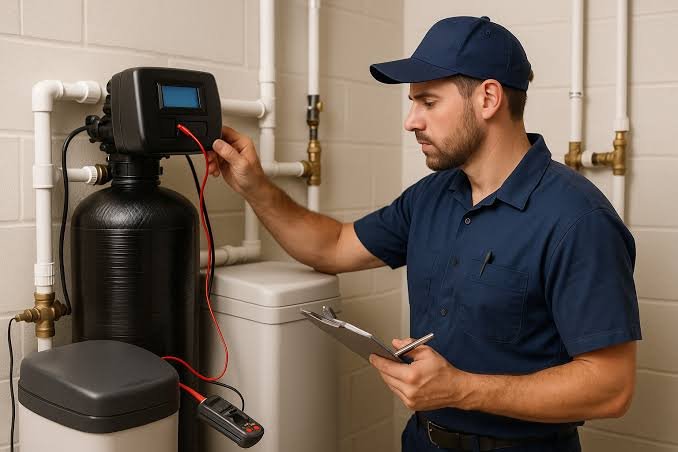
If scale is your biggest headache, water softeners are worth looking into.
A conventional water softener uses an ion-exchange process to reduce calcium and magnesium in the water. In practical terms, that can mean less mineral buildup throughout the plumbing system and fewer deposits on fixtures and appliances.
Many homeowners also notice softer-feeling laundry and easier soap lathering. The difference isn’t always dramatic on day one, but over months, the reduced scale can become quite noticeable.
There are considerations, naturally. Traditional systems often require salt, regular maintenance, and enough room for the equipment. You’ll also need to think about regeneration and water usage.
Still, if hard water is affecting the entire property, treating the problem at the point where water enters the house can make much more sense than constantly scrubbing individual fixtures.
Reverse Osmosis Is a Different Kind of Treatment
People sometimes lump all water treatment technologies together, but reverse osmosis works differently from softening.
Reverse osmosis systems use pressure to push water through a semipermeable membrane. This process can reduce many dissolved substances, depending on the specific system and its design.
They’re commonly used for drinking and cooking water rather than treating every gallon used in the house. An under-sink unit, for example, can provide treated water from a dedicated faucet without requiring a large whole-property installation.
The technology can be highly effective, but there are trade-offs. Membranes and pre-filters need periodic replacement, and reverse osmosis can produce wastewater. Water pressure and system efficiency also matter.
So, once again, the question isn’t “Is reverse osmosis good?” It’s “Is reverse osmosis appropriate for my water and my goals?”
That’s a much better question.
What About Whole-House Filtration?
If your concern extends beyond the kitchen sink, whole-house filtration may be worth considering.
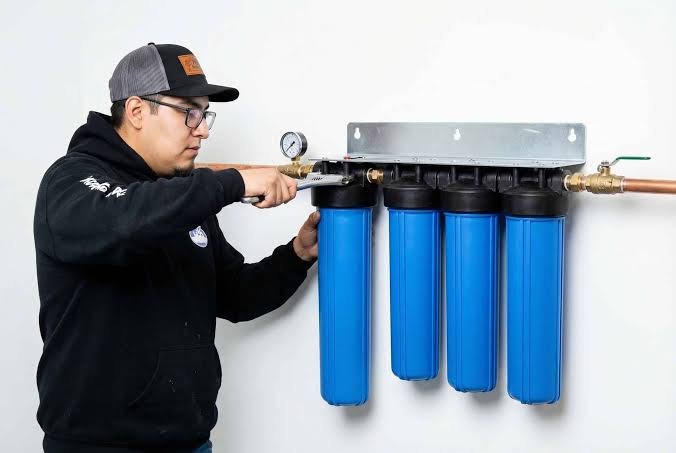
Whole house water filters are installed on the incoming water line so that treated water can reach multiple fixtures around the property. Depending on the filtration media and system design, they can target concerns such as sediment, chlorine taste and odor, or certain other substances.
This approach can be appealing when you want consistent treatment throughout the home. Showers, bathroom sinks, laundry, and kitchen fixtures can all receive filtered water.
But don’t assume a whole-house filter automatically handles everything. Different filters have different capabilities. Some are excellent for sediment and chlorine but aren’t intended to remove dissolved minerals. Others may be designed around a specific contaminant.
Reading the specifications carefully is important.
Filtration Isn’t the Same as Softening
This distinction is easy to miss.
A filter generally removes or reduces particular substances through physical filtration, adsorption, membranes, or other treatment methods. A softener is specifically designed to address water hardness.
If your showerhead is covered in scale, installing a carbon filter may improve taste but leave the hardness problem largely untouched.
Likewise, installing a softener because your water tastes unpleasant may not solve the issue you’re experiencing.
It all comes back to diagnosis.
Think of water treatment equipment as tools in a toolbox. You wouldn’t grab a screwdriver when what you really need is a wrench.
Consider How Much Water Your Family Uses
Household size matters more than many buyers realize.
A small apartment with one or two residents has very different water demands from a large family with several bathrooms and appliances running throughout the day.
Flow rate becomes particularly important with whole-home equipment. A system that cannot keep up with demand may cause noticeable pressure drops when multiple fixtures are operating.
Before purchasing, check the system’s rated flow and consider your peak household usage.
It might not be the most exciting part of the research, but it can save you from a very disappointing shower later.
Maintenance Is Part of the Equation
Every water treatment system requires some level of care.
Filters need replacing. Softener salt needs replenishing. Reverse osmosis membranes eventually require replacement. Some systems need professional servicing or periodic cleaning.
Ignoring those tasks can reduce performance and shorten equipment life.
Before buying, find out exactly what maintenance involves. Ask how frequently filters need replacement, what replacement parts cost, and whether those parts are readily available.
A system with a low purchase price can become expensive if its consumables are costly or difficult to find.
Think about ownership, not just installation day.
Don’t Let Marketing Make the Decision
Water treatment companies use plenty of impressive language. “Advanced purification.” “Maximum protection.” “Ultimate filtration.”
Those phrases may sound reassuring, but they don’t tell you much without context.
Look for measurable information. What contaminants does the system reduce? Under what conditions? Is the equipment independently certified or tested for the claims being made? What maintenance does it require?
And be wary of anyone who insists you need a particular system without first asking about your water.
A trustworthy recommendation should be based on your actual situation.
Price Matters, But Value Matters More
Nobody wants to overspend, but buying the cheapest equipment isn’t always the smartest move.
Compare the initial cost with installation, replacement filters, salt, electricity, servicing, warranties, and expected lifespan.
Two systems with similar price tags can have very different ownership costs.
It can also be tempting to buy more technology than you need. A system with every available feature may look impressive, but if your water doesn’t require those features, you’re paying for complexity without necessarily gaining useful benefits.
Simple can be better.
Making the Final Choice
Choosing between a softener, reverse osmosis unit, or whole-house filtration system doesn’t need to feel like choosing between three mysterious machines.
Start with your water. Identify the problem. Decide whether you need treatment for the entire home or just a drinking-water source. Then consider flow rate, installation, maintenance, replacement costs, and long-term value.
Most importantly, don’t assume that the most advanced system is automatically the best one.
The right setup is the one that addresses your particular water concerns without creating unnecessary expense or maintenance.
And once it’s installed and properly maintained, the ideal water treatment system should fade into the background. You won’t think about it every morning. You’ll simply notice that the water tastes better, the fixtures stay cleaner, and those annoying little water problems aren’t demanding your attention anymore.
For something as ordinary as turning on a tap, that’s a pretty worthwhile improvement.