Water quietly shapes everyday life. We use it to cook breakfast, wash dishes, take showers, do laundry, water plants, and clean the house. Because it is always there when we turn the tap, it is easy to forget that the quality of that water—and the condition of the plumbing delivering it—can make a real difference.
Then one morning, the shower door has a cloudy film. The faucet has white crust around the base. The coffee tastes slightly different. Or maybe a pipe starts making a strange knocking sound when the washing machine fills.
None of these things necessarily means there is a major problem. Still, they are worth noticing.
Good water management isn’t about buying every treatment product available. It starts with understanding what is happening in the home and choosing practical solutions that address the actual issue.
Begin With the Water Itself
Before choosing a treatment system, homeowners should understand their water source and its characteristics. Municipal water and private well water can present different concerns, while even two homes in the same neighborhood may experience different problems because of plumbing conditions.
A basic water analysis can reveal information about hardness, pH, iron, sediment, dissolved minerals, and other characteristics. If the concern involves a private well, additional testing may be appropriate depending on the local environment and history of the water source.
This information matters because treatment works best when it has a specific target.
A filter chosen simply because it has impressive packaging isn’t necessarily the right filter. Water treatment should be based on evidence, not guesswork.
Understanding Filtration and Softening
People sometimes use the words filtration and softening as if they mean the same thing. They don’t.
Filtration is generally used to reduce particular particles, substances, tastes, or odors, depending on the technology. Softening, meanwhile, is primarily intended to address hardness minerals such as calcium and magnesium.
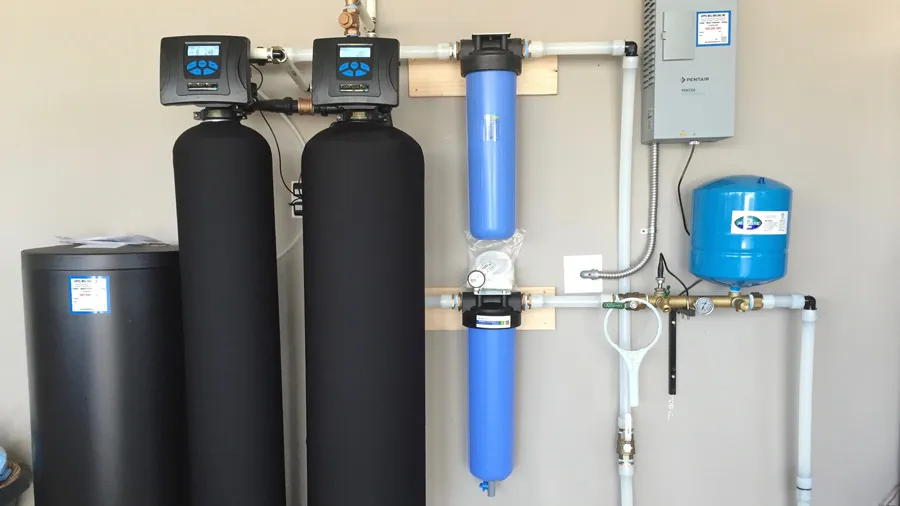
For households dealing with scale on fixtures, mineral deposits, or problems associated with hard water, water softeners and filtration systems can play different but complementary roles. The important thing is understanding what each piece of equipment is designed to accomplish.
A properly selected combination may improve water quality while also helping protect plumbing fixtures and appliances from excessive mineral buildup.
Hard Water Can Become a Daily Irritation
Hard water isn’t usually dramatic. It simply has a way of making ordinary chores more annoying.
You clean the shower, and the spots come back. You wash the glassware, and it still looks cloudy. Soap doesn’t seem to lather quite the way it should. A water heater may gradually accumulate mineral deposits as well.
These issues can add up.
A properly sized treatment system can reduce the effects of hardness, but homeowners should have realistic expectations. Softening doesn’t remove every contaminant, and it isn’t intended to replace drinking-water filtration when a separate concern exists.
Knowing the difference helps avoid spending money on equipment that doesn’t solve the actual problem.
Plumbing Problems Can Hide in Plain Sight
Water-quality issues and plumbing issues can sometimes look surprisingly similar.
Discolored water might be related to plumbing materials or disturbance in a line. Low pressure could result from a clogged component, a valve issue, mineral buildup, or a leak. A damp cabinet might indicate a small connection problem rather than a water-treatment concern.
This is why professional evaluation can be useful when symptoms aren’t obvious.
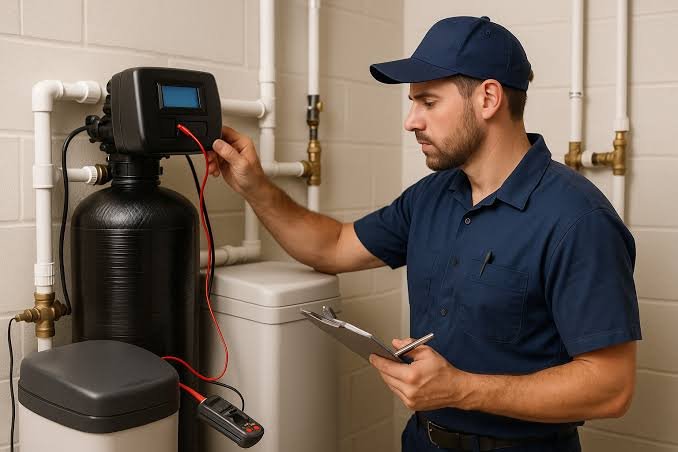
A company offering complete plumbing services may be able to look beyond the visible symptom and assess the surrounding system. That can be particularly valuable when water-treatment equipment needs to be connected to older plumbing or when a repair involves more than simply replacing a faucet.
The goal is to fix the cause, not just cover up the symptom.
Drinking Water Is a Separate Consideration
Not everyone needs the same level of treatment throughout the house.
Some homeowners are primarily concerned about the water they drink and use for cooking. In that situation, a point-of-use system may make more sense than treating every gallon entering the property.
Reverse osmosis systems are one option for reducing many dissolved substances from drinking water. Carbon filtration may help with certain taste and odor concerns. The appropriate technology depends on what is actually present in the water.
And sometimes, the simplest solution really is the best one.
If testing shows that a household has one specific concern, there may be no reason to build a complicated treatment system around it.
Installation Deserves Just as Much Attention
Even excellent equipment can perform poorly if it isn’t installed correctly.
Water flow, pressure, pipe sizing, drainage, available space, and accessibility all need to be considered. Filters and other components should also be positioned so homeowners can actually service them later.
This last point sounds minor until you’re standing in a cramped utility closet trying to replace a filter with no room to move your hands.
Professional installation can help ensure that treatment equipment works with the home’s existing plumbing rather than against it. It also gives homeowners someone to contact when questions come up after installation.
Don’t Ignore Water Pressure
Water pressure is one of those things you may only notice when it changes.
A sudden drop can make showers frustrating and affect appliances or irrigation equipment. Excessive pressure, meanwhile, can place unnecessary stress on plumbing components.
If pressure changes throughout the entire house, don’t automatically blame the showerhead. Check whether multiple fixtures are affected.
Pressure problems can have several causes, including leaks, clogged pipes, failing regulators, or issues with the water supply. Identifying the cause before replacing random components can save both time and money.
Maintenance Keeps Systems Useful
Water-treatment equipment doesn’t become maintenance-free simply because it has been professionally installed.
Filters need replacement. Softener systems require attention. Reverse osmosis membranes eventually need changing. Connections and valves should be checked when appropriate.
A neglected system may slowly lose effectiveness without producing an obvious warning. Water may develop a different taste, pressure may change, or mineral buildup may gradually return.
Keeping a simple service calendar helps. Write down when filters were replaced and when equipment was inspected. It’s not glamorous, but neither is searching through old receipts at 9 p.m. because you can’t remember when the filter was last changed.
Look Beyond the Initial Price
When comparing water-treatment options, the purchase price is only one part of the equation.
Consider installation costs, replacement filters, maintenance requirements, expected equipment life, water usage, and the complexity of future service.
A cheaper system isn’t necessarily cheaper over five or ten years. Likewise, an expensive system isn’t automatically better.
The better question is: does this equipment solve the problem efficiently and reasonably for this particular home?
That question keeps the focus where it belongs.
Better Water Starts With Better Decisions
Home water systems don’t need to be mysterious. Start with testing and observation. Understand the source. Identify whether the concern involves hardness, sediment, taste, odor, plumbing, or something else. Then choose equipment based on those findings.
For some households, water softeners may make a noticeable difference in everyday comfort. For others, filtration or drinking-water treatment may be more appropriate. Some homes may need plumbing repairs before any new treatment equipment is considered.
There isn’t one perfect setup for everyone, and that’s actually reassuring. It means homeowners don’t have to chase a universal solution.
They simply need the right one.
With thoughtful testing, appropriate equipment, quality installation, and regular maintenance, a home’s water system can remain dependable for years. And when something does go wrong, noticing it early often turns a stressful emergency into a manageable repair—which is exactly where good home maintenance should leave you.