There’s a point when water stops feeling like a simple household utility and starts becoming a source of little annoyances. The shower glass needs cleaning again. The faucet has a chalky ring around it. Soap doesn’t seem to rinse quite right, and the coffee somehow tastes different even though you’re using the same beans.
None of these things should send you into a panic. But they are reminders that the water entering a home can have characteristics worth understanding.
Choosing the right treatment isn’t about buying the most expensive equipment or filling a utility room with tanks and filters. It’s about identifying what your water actually needs and finding a system that fits your household, your plumbing, and your daily routine.
Start With the Water You Have
Before thinking about equipment, pay attention to the signs around the house. Hard water often leaves mineral deposits on fixtures and shower doors. Sediment can collect in aerators or filters. Certain water conditions may contribute to staining, unusual odors, or changes in taste.
These clues are helpful, but they don’t tell the complete story.
Testing can reveal details that your eyes and taste buds simply can’t. Depending on the source, a water analysis may examine hardness, pH, iron, sediment, and other characteristics.
That information gives you a much better foundation for choosing treatment. Otherwise, it’s easy to spend money solving a problem you don’t actually have.
Hard Water Has a Way of Making Itself Known
Hard water tends to show up slowly. You might not notice it on the first day or even the first month. Over time, though, the deposits become harder to ignore.
Minerals such as calcium and magnesium can contribute to scale on fixtures and appliances. Soap and detergents may also behave differently in harder water.
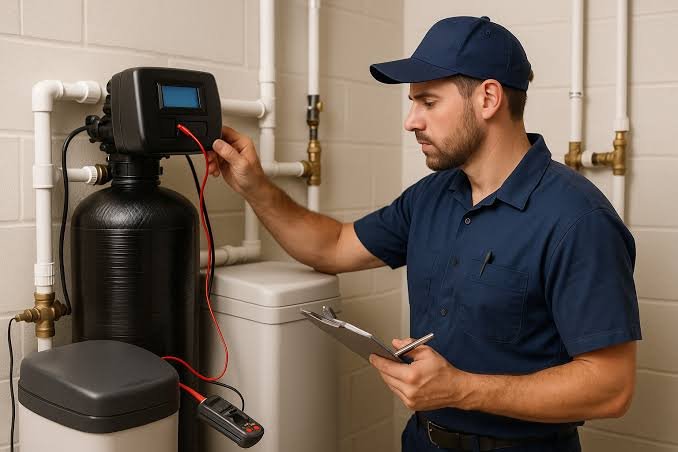
For households where hardness is a persistent concern, water softeners can be an effective option. Conventional softeners use ion exchange to reduce calcium and magnesium in the water, which can help limit scale and make everyday cleaning easier.
The important part is choosing the right size and configuration. An undersized unit may struggle during busy periods, while an oversized system can cost more than necessary.
Drinking Water Is Its Own Consideration
A household may be perfectly happy with the water used for bathing and laundry while still wanting a different experience at the kitchen faucet.
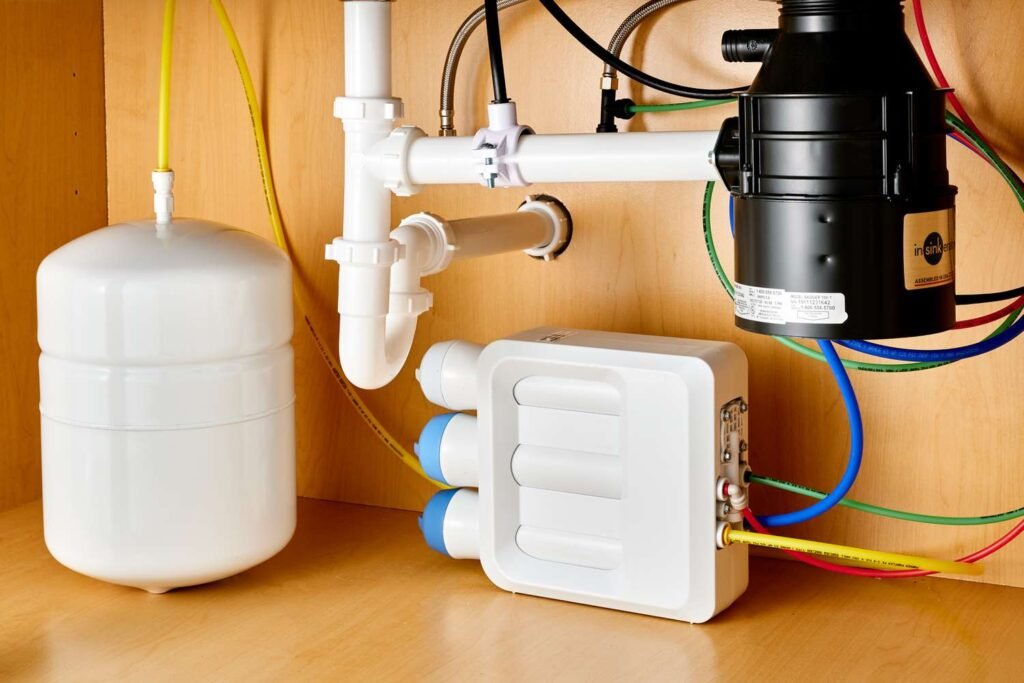
That’s where point-of-use treatment can be useful. Drinking water systems can be designed to address specific concerns affecting water used for drinking and cooking. Depending on the water quality, this could involve carbon filtration, reverse osmosis, or another suitable technology.
The best choice depends on the water itself. A system designed to improve taste isn’t necessarily intended to address every possible contaminant, and that distinction is worth keeping in mind when comparing products.
Some Water Problems Need Specialized Attention
Not every water-quality concern fits neatly into the categories of “hard” or “filtered.”
A property may have elevated iron, sulfur-related odors, unusual sediment, or another characteristic that requires more targeted treatment. In those situations, specialty filtration systems may provide a more appropriate solution than a standard cartridge filter.
The word “specialty” shouldn’t mean unnecessarily complicated, though. Good treatment design is about solving a specific problem with an appropriate technology.
If testing shows a particular issue, ask how the proposed equipment addresses it. A reputable provider should be able to explain the purpose of each component in plain language.
Well Water Requires Extra Attention
Homes using private wells have a different starting point. Unlike municipal supplies, private wells are the homeowner’s responsibility, which makes regular testing especially important.
Well water can vary significantly from property to property. Some wells have hard water. Others may have iron staining, sediment, odor, or microbial concerns. Conditions can also change over time.
That doesn’t mean every well requires a complicated treatment system. It means the system should be based on the actual water.
Testing first, then treatment, is usually a much more sensible sequence than buying equipment based on what worked for someone down the road.
Think About Flow, Not Just Filtration
A water treatment system has to work with your home’s plumbing. That means flow rate matters.
Imagine someone taking a shower while the dishwasher is running and another family member turns on the kitchen faucet. If the treatment equipment can’t comfortably handle the demand, water pressure may suffer.
When selecting equipment, consider household size, number of bathrooms, typical water use, and peak demand. Good sizing isn’t particularly exciting, but you’ll appreciate it when the whole family is using water at once.
It’s one of those details that matters more in real life than it does in a product brochure.
Installation Can Affect Performance
Even excellent equipment can underperform when installed incorrectly.
Pipe sizing, bypass valves, drain connections, pressure, equipment placement, and programming can all influence operation. The system should also be positioned so future maintenance isn’t unnecessarily difficult.
A clean installation should leave you with reasonable access to filters, controls, tanks, and connections. If everything is crammed into an inaccessible corner, even a simple service task can become frustrating.
Think ahead. You aren’t just installing equipment for today; you’re creating something you’ll need to live with for years.
Maintenance Is Part of the Deal
Every treatment system has some kind of maintenance requirement. Filters eventually become saturated. Membranes need replacement. Valves and other components may require inspection.
Fortunately, routine care is generally manageable when you know what to expect.
Keep track of replacement dates. Watch for changes in water pressure, taste, odor, or appearance. If the system begins behaving differently, don’t automatically assume the equipment needs to be replaced.
Sometimes a clogged filter or incorrect setting is all that’s wrong.
Understanding your system also helps. Ask the installer what you can safely maintain yourself and which tasks should be handled by a professional.
Don’t Buy Features Just Because They Sound Impressive
Modern water treatment equipment can include plenty of smart controls and technical features. Some are genuinely useful. Others may not make much difference to your household.
Before paying extra, ask what the feature actually does.
Does it make maintenance easier? Improve monitoring? Help manage water use? Protect another component? If the answer is clear, it may be worthwhile.
If the explanation sounds like marketing fog, take a step back.
The best treatment system isn’t necessarily the newest or most sophisticated one. It’s the one that reliably handles the issue you’re trying to solve.
Look at the Long-Term Cost
Price matters, but the purchase price isn’t the whole story.
Consider replacement filters, salt or other consumables, electricity, water use, servicing, and eventual component replacement. A system that costs less upfront can become expensive if its maintenance requirements are unusually high.
On the other hand, paying more for equipment that genuinely lasts longer or performs better may make financial sense.
A good comparison looks beyond the initial invoice.
Make Water Treatment Work for Your Home
There isn’t one perfect water treatment system for every household. Water sources differ. Plumbing differs. Families use water differently. Even personal preferences can vary.
The smarter approach is to start with the actual water, identify the problems worth solving, and choose equipment accordingly.
Maybe you need help with hardness. Maybe the kitchen water is your main concern. Maybe a specialized issue requires targeted filtration. Whatever the case, treatment should have a clear purpose.
When the system is properly selected, installed, and maintained, it tends to disappear into the background—and that’s really the best outcome. You turn on the faucet, fill a glass, take a shower, and get on with your day. No fuss, no second-guessing. Just water that works better for the home that depends on it.