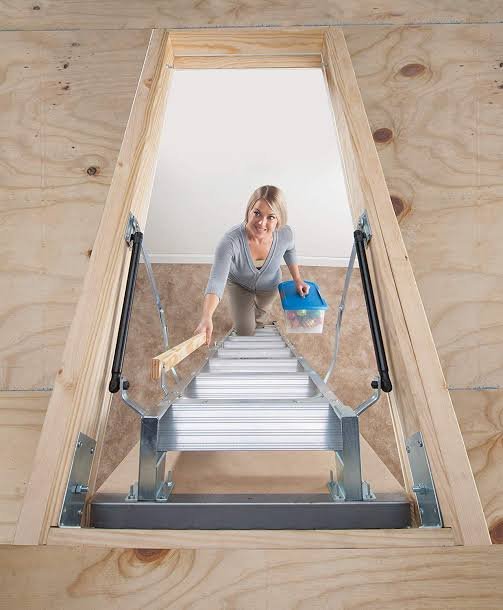
There’s usually a moment when an attic stops being a useful storage space and starts feeling like a chore. You need the winter decorations, a suitcase, or that box of old photographs, but getting upstairs means dragging out a ladder and hoping everything goes smoothly.
It doesn’t have to be that way.
A well-designed attic access system can make the difference between a space you avoid and one you actually use. Whether you’re finishing an attic, improving an older home, or simply tired of wrestling with an awkward ceiling hatch, the right access solution can add convenience without taking over the room below.
The trick is choosing an option that fits the house, the available space, and the way you expect to use the attic.
Look at the Existing Opening First
Before choosing a ladder or staircase, inspect the existing attic opening. Its dimensions will influence what can be installed without significant modifications.
Measure the opening’s length and width, then check the ceiling height and the amount of clear floor space underneath. Don’t forget to look at what happens when the access system is fully extended. A ladder may fit inside the opening perfectly but land directly in front of a doorway or furniture.
If there isn’t an existing opening, the project becomes more involved. Cutting into a ceiling requires attention to joists, electrical wiring, insulation, ductwork, and other hidden components.
That’s why Attic ladder installation should begin with planning rather than simply buying the first model that appears to fit.
Think About How Often You Use the Attic
Not every homeowner needs the same solution.
If the attic is mostly used for holiday decorations and luggage, a folding ladder may be more than enough. Someone who enters the attic several times a week may prefer a sturdier system with wider steps and a handrail.
Frequency of use is easy to underestimate. An attic that seems like “just storage” can become much more useful once access is comfortable. You might start keeping tools, seasonal clothing, hobby supplies, or household equipment there.
But convenience shouldn’t come at the expense of safety. The access system needs to be stable, properly supported, and easy to operate.
When Replacement Makes More Sense
Older attic ladders can become worn long before the homeowner realizes there’s a problem. Hinges may loosen, springs can weaken, steps can crack, and wooden components may deteriorate with age.
If your existing ladder feels shaky, doesn’t extend evenly, or requires unusual effort to open and close, it’s worth having it assessed.
In many cases, attic ladder replacement is a better long-term choice than repeatedly repairing worn components. A newer system may also offer improved insulation, better step design, and easier operation.
That doesn’t mean every old ladder needs to go. If it’s structurally sound and properly maintained, it may continue working for years. The important thing is to judge its condition honestly rather than waiting until something fails.
Different Styles Solve Different Problems
Folding attic ladders are popular because they disappear into the ceiling when not in use. Wooden versions have a familiar, traditional appearance, while aluminum models tend to be lightweight and durable.
Telescoping ladders are another option when floor space is tight. They collapse into a compact section rather than unfolding several long segments into the room.
There are also scissor-style systems designed for particular layouts. Each option has advantages, and none is universally best.
Consider ceiling height, opening dimensions, available landing space, frequency of use, weight requirements, and personal comfort. A solution that works beautifully in one home may be awkward in another.
Pull-Down Stairs Can Be Surprisingly Practical
For many homeowners, the phrase “attic stairs” brings to mind a permanent staircase that takes up half the hallway. That’s not necessarily the case.
Modern pull-down attic stairs can provide relatively comfortable access while remaining hidden when they’re not needed. Depending on the design, they may include wide treads, handrails, insulated doors, and mechanisms that make opening and closing easier.
They’re especially useful when the attic is used regularly but there isn’t enough space for a conventional staircase.
Still, the installation has to be precise. The frame needs to be secure, the ladder must extend correctly, and the feet should sit firmly on the finished floor when deployed.
Don’t Forget About the Ceiling Structure
The area above your ceiling isn’t empty.
Joists provide structural support, and cutting or modifying them can affect how loads are transferred through the ceiling. There may also be electrical cables, plumbing lines, ductwork, or insulation occupying the same area.
A qualified installer will inspect the proposed location before making modifications. If framing needs to be altered, the work should be planned carefully and reinforced appropriately.
This is one of those situations where saving a little money by rushing can create a much bigger problem later.
Insulation Is Part of the Conversation
An attic access panel is effectively another opening between the conditioned part of your home and the attic.
If the hatch isn’t insulated or sealed properly, conditioned air can escape. During very hot or cold weather, that can affect comfort and contribute to unnecessary energy use.
Look for access systems designed with insulation in mind. Weatherstripping around the hatch can also help reduce drafts.
It’s a small detail, admittedly. But home efficiency often comes down to lots of small details working together.
Safety Doesn’t Stop at the Ladder
The surrounding area matters, too.
Make sure the landing area is clear and well lit. Avoid storing objects directly beneath the ladder where they could interfere with opening or closing it. If you regularly carry boxes into the attic, consider whether you can maintain three points of contact while climbing.
A handrail can make a significant difference. Wide steps may also feel more secure than narrow rungs, especially when you’re carrying something.
And remember the weight rating. An attic ladder isn’t a general-purpose construction ladder. Use it within the limits specified by the manufacturer.
A Finished Look Is Worth the Effort
Even a perfectly functioning attic ladder can look unfinished if the surrounding ceiling has rough edges or mismatched trim.
Once the mechanical work is complete, attention should turn to the visible details. The frame should sit neatly, the trim should be properly fitted, and the hatch should close cleanly.
If the ceiling has a particular texture or finish, the area around the opening may need touch-up work. These aren’t huge details, but they’re what make an installation look intentional rather than improvised.
Think Beyond Storage
An accessible attic can provide more than a place to hide boxes.
It can support seasonal storage, hobby equipment, keepsakes, household supplies, or even future renovation plans. If you’re considering converting the attic into a living or working space, however, a folding ladder may not be the appropriate long-term access solution.
Building codes and local requirements can also apply when an attic becomes occupied space. In that situation, the access needs are very different from those of a simple storage area.
Planning with the future in mind can prevent you from paying for the same work twice.
The Right Access Makes the Attic More Useful
A good attic access system isn’t something you should have to think about every time you use it. It should open smoothly, feel secure underfoot, fit naturally into the room, and close tightly when you’re finished.
That starts with choosing the right style and continues with careful installation. Whether you’re replacing an aging ladder or creating attic access for the first time, measurements, structural considerations, insulation, safety, and everyday convenience all deserve attention.
Sometimes the best home improvements are the ones that don’t dramatically change the appearance of a room. They simply remove an irritation you’ve lived with for years.
And once reaching the attic becomes easy, you may find yourself using that forgotten space a whole lot more.