Water has a funny way of becoming invisible in our daily lives. We turn on the tap, fill a glass, make coffee, wash vegetables, take a shower, and move on. It’s only when something changes that we really notice it.
Maybe the water tastes slightly different. Perhaps there’s a white crust around the faucet, orange staining in the bathtub, or tiny particles floating in a glass after a plumbing repair. These signs don’t always point to a serious problem, but they do raise a fair question: what’s actually happening with the water inside the house?
The answer isn’t always as simple as buying a filter. Good water treatment starts with understanding the source, identifying the problem, and choosing equipment that fits the household rather than chasing the latest gadget.
Every Home Has Different Water Needs
Two houses on the same street can have surprisingly different water-quality concerns. One may deal with hard water, while another has sediment or an unpleasant chlorine taste. Homes supplied by private wells can face a different mix of minerals and naturally occurring substances.
Even household habits matter. A family of six uses considerably more water than a retired couple living in the same-sized property. A home with several bathrooms and high-flow fixtures puts different demands on treatment equipment than a smaller property.
That’s why water treatment should be approached as a household decision, not simply a product purchase.
Begin With a Water Test
Before choosing equipment, find out what’s in the water.
A water-quality test can examine characteristics such as hardness, pH, iron, manganese, chlorine, sediment, nitrates, and microbial indicators, depending on the source and the type of testing performed.
Testing is useful because your senses aren’t reliable laboratory instruments. Water can look perfectly clear while containing substances that aren’t visible. Conversely, cloudy water isn’t automatically unsafe.
If you’re dealing with a private well, periodic testing is especially important. Heavy rainfall, flooding, nearby construction, changes in groundwater conditions, or well repairs can potentially affect water quality.
The goal isn’t to become a water chemist. It’s simply to replace guesswork with useful information.
Whole-Home Filtration Has a Different Purpose
A small kitchen filter can be perfectly adequate when your only concern is drinking-water taste. But if the issue affects multiple fixtures, a more comprehensive approach may make sense.
Whole-home water filtration treats water at or near the point where it enters the property, depending on the system design. That means filtered water can reach showers, sinks, laundry areas, and other fixtures throughout the house.
This can be useful for homes dealing with sediment, chlorine taste and odor, or certain other water-quality concerns that are appropriate for whole-house treatment.
However, whole-home filtration isn’t automatically better than point-of-use filtration. It depends on what you’re trying to accomplish. Treating water throughout the house can require more equipment and maintenance, so it should have a clear purpose.
Hard Water Is a Common Household Frustration
If you regularly scrub white deposits from faucets, you’re probably familiar with hard water.
Hardness comes primarily from dissolved calcium and magnesium. These minerals can leave scale on fixtures, affect how soap behaves, and contribute to deposits inside water-using appliances.
A properly sized softener can help reduce those effects. But sizing and settings matter. An undersized system may struggle during periods of heavy use, while an oversized unit can be unnecessarily expensive.
It’s also important to remember that a softener is designed for hardness. If the water also contains iron, sulfur, sediment, or other contaminants, another treatment stage may be needed.
In other words, don’t ask a softener to do a filter’s job.
Well Water Deserves Extra Attention
Private well owners have a different relationship with their water supply. There’s no municipal treatment plant between the source and the kitchen faucet, so homeowners need to understand and monitor their own system.
Well water treatment can involve several different technologies depending on what testing reveals. Iron, sulfur odors, hardness, sediment, and microbial concerns may each require different approaches.
The well itself also deserves attention. A secure well cap, proper drainage around the well, and routine inspections can help protect the source. If water suddenly changes after heavy rain or flooding, don’t simply assume the filter needs replacing. The source should be investigated as well.
Sometimes the most important treatment step happens before water ever reaches the filtration equipment.
Reverse Osmosis Can Be Useful at the Kitchen Sink
Not every gallon of household water needs the same level of treatment.
For drinking and cooking, some homeowners prefer an additional filtration stage designed specifically for the kitchen. Reverse osmosis is one option that can reduce many dissolved substances by forcing water through a semipermeable membrane.
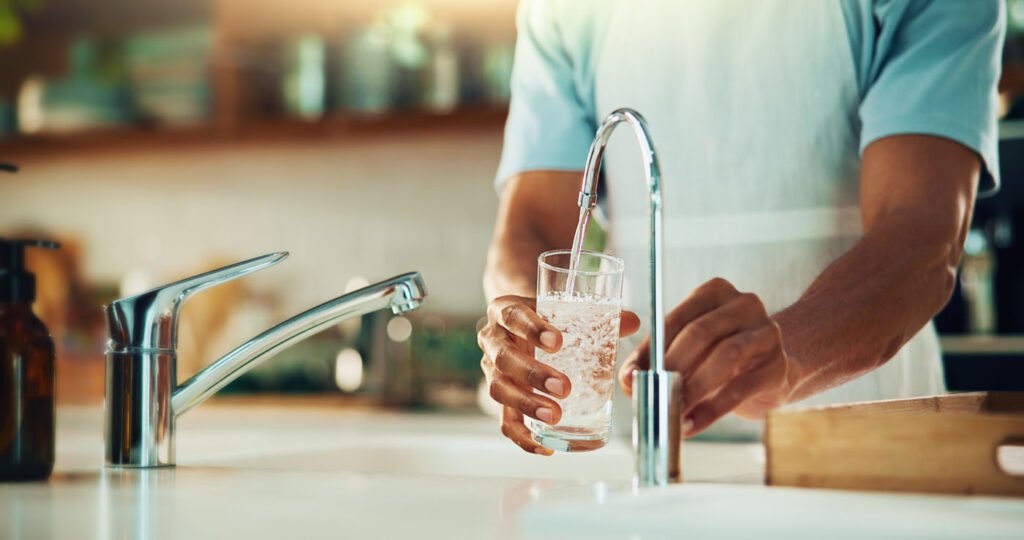
RO systems are commonly installed under a kitchen sink and connected to a dedicated faucet. Depending on the design and feed-water conditions, they can provide highly treated water for drinking and food preparation.
There are trade-offs. Reverse osmosis systems require filter and membrane replacement, and they typically produce some wastewater as part of the filtration process. They also shouldn’t be selected simply because “more purified” sounds automatically better.
The right question is whether the system addresses a specific water-quality goal.
Installation Can Make or Break the System
A treatment system isn’t much use if it isn’t installed correctly.
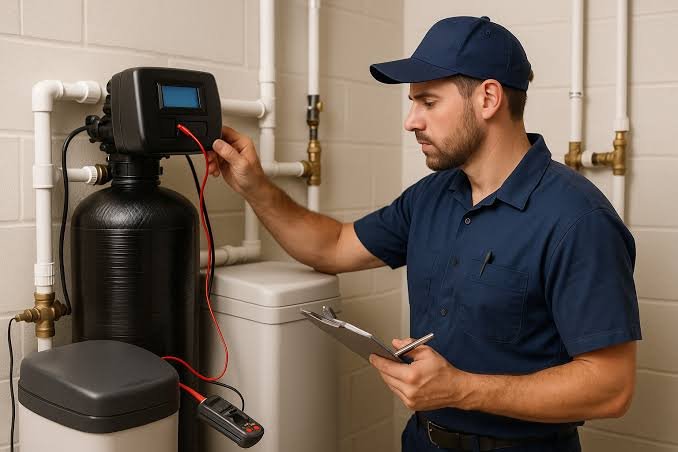
Flow rate, pressure, plumbing configuration, drainage, available space, and access for maintenance all need to be considered. A system should fit comfortably into the home’s plumbing rather than being squeezed into whatever space happens to be available.
Maintenance access is often overlooked. Filters and other components eventually need attention, so equipment should be positioned where a technician or homeowner can actually reach it without dismantling half the utility room.
Good installation is rarely flashy. In fact, you may barely notice it once everything is finished. That’s the point.
Maintenance Keeps Water Quality Consistent
Even a high-quality system needs routine care.
Filters collect material. Softening equipment requires periodic regeneration and attention. Reverse osmosis membranes eventually need replacement. Specialized treatment media may have their own service schedules.
Keep track of when components are replaced and when the system is serviced. If something suddenly changes — water pressure drops, filters clog unusually fast, or an odor returns — those records can help identify what happened.
And don’t wait until the system completely stops working. Small changes are often easier and cheaper to address than major failures.
Choose Solutions Based on Evidence
Water treatment can feel complicated because there are so many products available. The easiest way to simplify it is to work backward.
Start with the water source. Test for relevant concerns. Decide which problems actually matter to your household. Then choose technology designed for those problems.
That approach may lead to a simple sediment filter. It may call for softening equipment, whole-home filtration, well treatment, or dedicated drinking-water filtration. Sometimes a combination is appropriate.
There’s no reward for installing equipment you don’t need.
The best water-treatment system is the one that quietly does its job, fits your home, and can be maintained without becoming a constant headache. Once the water tastes right, the scale is under control, and the equipment is running reliably, you get something pretty valuable in return: one less household problem to think about.
And honestly, that’s what good home systems should do. Make everyday life a little easier, then stay out of the way.