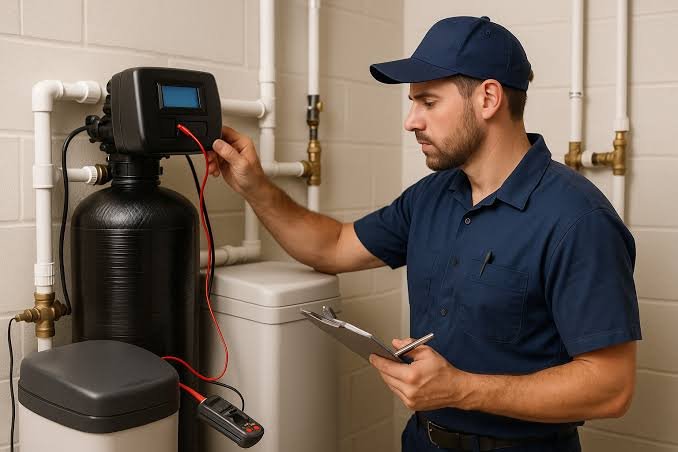
Water usually looks innocent enough. Fill a glass from the kitchen faucet and, most of the time, it looks exactly like what you’d expect — clear, quiet, and completely ordinary. But appearance doesn’t tell the whole story. Some substances dissolved in water can’t be seen, smelled, or tasted, which is why good water treatment starts with understanding what’s actually present.
For homeowners, this doesn’t mean becoming a water-quality scientist overnight. It simply means learning which concerns matter, what different filtration technologies can do, and when testing is worth the effort. A thoughtful approach can prevent wasted money and help you build a system around real needs rather than marketing promises.
Why Invisible Contaminants Matter
Water can pick up substances as it travels through natural sources, treatment systems, storage tanks, and household plumbing. Some are naturally occurring minerals. Others may enter through environmental sources or infrastructure.
Among the concerns that often receive attention are heavy metals, including substances such as lead, arsenic, and mercury. The presence and concentration of any particular substance depend heavily on the local water source and surrounding conditions.
This is one reason homeowners shouldn’t assume that a standard pitcher filter will handle every possible contaminant. Different filtration technologies are designed for different purposes.
If you have a specific concern, testing the water first is usually the sensible move. Once you know what you’re dealing with, you can look for a treatment method designed to address that particular issue.
Dissolved Minerals Can Change the Way Water Behaves
Not everything dissolved in water is necessarily harmful. Water naturally contains minerals, and some contribute to taste and overall chemistry.
A measurement called total dissolved solids, or TDS, is often used as a general indicator of the amount of dissolved material in water. dissolved solids can include minerals, salts, metals, and other substances.
TDS by itself doesn’t tell you exactly which substances are present. That’s an important point that sometimes gets lost in conversations about water filtration. A high TDS reading doesn’t automatically mean the water is unsafe, just as a low reading doesn’t guarantee that every possible contaminant is absent.
Instead, TDS can be one piece of a broader water-quality picture. Depending on the situation, additional testing may be needed to identify specific substances.
Reverse Osmosis Has a Specific Strength
Reverse osmosis is one of the technologies commonly used when homeowners want to reduce a broad range of dissolved substances in drinking water.
The process uses pressure to move water through a semipermeable membrane. Many unwanted dissolved substances are retained while treated water passes through.
RO systems are often installed under the kitchen sink, although larger systems can be designed for different applications. They’re useful for drinking and cooking when water testing indicates that this level of treatment is appropriate.
There are practical considerations, though. RO membranes need protection from sediment and certain other issues, and the system requires regular filter changes. Water pressure and system capacity also affect performance.
In other words, installing an RO system is not the end of the story. Maintenance is part of getting the intended result.
Filtration Should Match the Problem
There’s no single filter that handles everything equally well. That’s why choosing filtration equipment based on a specific water problem is so important.
Carbon filters, for example, are commonly used to reduce chlorine and improve taste and odor. Sediment filters can capture particles before they reach downstream equipment. Water softeners address hardness minerals. Reverse osmosis can reduce many dissolved substances.
The concept of superior filtration can sound appealing, but the word “superior” doesn’t mean much unless you know what the system is actually removing.
Look for performance data and certifications where applicable. Ask what contaminants a filter has been tested to reduce and under what conditions. A filter designed for chlorine taste isn’t necessarily the right tool for a heavy-metal concern.
Specific information beats vague promises every time.
Testing Is the Missing Piece for Many Homes
It can be tempting to buy equipment first and ask questions later. Unfortunately, that approach can lead to unnecessary expense.
A proper water test can provide useful information about hardness, pH, iron, manganese, chlorine, TDS, and potentially other contaminants. The appropriate test depends on the water source and the concerns being investigated.
For private wells, periodic testing is particularly important because groundwater conditions can change. Flooding, nearby land activity, changes in the well itself, or other environmental factors may influence water quality.
Even municipal water users can benefit from understanding their supply, especially when older household plumbing may affect water after it leaves the utility system.
Don’t Ignore the Plumbing
Sometimes the water entering your home isn’t the main issue. Your home’s plumbing can influence what comes out of the faucet.
Older pipes and fixtures may contribute metals or other materials to water. This can make a point-of-use filter useful even when the incoming municipal supply meets quality requirements.
If you’re concerned about water at a particular faucet, consider testing that location rather than relying exclusively on a sample taken elsewhere.
It’s a small distinction, but it can change the treatment strategy.
Maintenance Makes Filtration Work
A filter can only perform properly when it is maintained. That sounds obvious, yet filter replacement is one of the easiest household tasks to forget.
As filters collect contaminants or particles, flow can decline. Some systems may also become less effective when cartridges or membranes are used beyond their recommended service life.
Write down the installation date. Set a reminder. Keep replacement cartridges somewhere sensible. These aren’t glamorous tips, but they work.
And don’t wait for a complete failure before checking equipment. Changes in pressure, taste, odor, or water appearance can be useful warning signs.
Consider the Cost Over Time
When comparing filtration systems, look beyond the initial purchase price. Replacement filters, membranes, professional servicing, installation, water usage, and potential repairs all contribute to the long-term cost.
A cheap system requiring frequent specialized cartridges may not be as inexpensive as it first appears. Likewise, an expensive system isn’t automatically a better investment.
Think about what you actually need and how much water your household consumes. A small point-of-use system may be perfectly adequate for drinking water, while a larger household may require a different arrangement.
The goal is value, not simply a bigger equipment list.
Better Decisions Begin With Better Information
Water filtration doesn’t need to be mysterious. The basic process is surprisingly straightforward: identify the concern, test the water, choose technology that addresses the problem, and maintain the equipment properly.
Some homes may need only simple taste-and-odor filtration. Others may benefit from softening, sediment control, reverse osmosis, or specialized treatment.
The important thing is not to chase every new filtration claim that appears online. Start with evidence. Know what’s in your water and understand what your chosen system is designed to do.
After all, the best water treatment system isn’t the one with the longest list of features. It’s the one that solves the right problem, works reliably, and fits comfortably into your life.
That’s a much more useful definition of clean water — and probably the one that matters most when you’re standing at the kitchen sink with a glass in your hand.